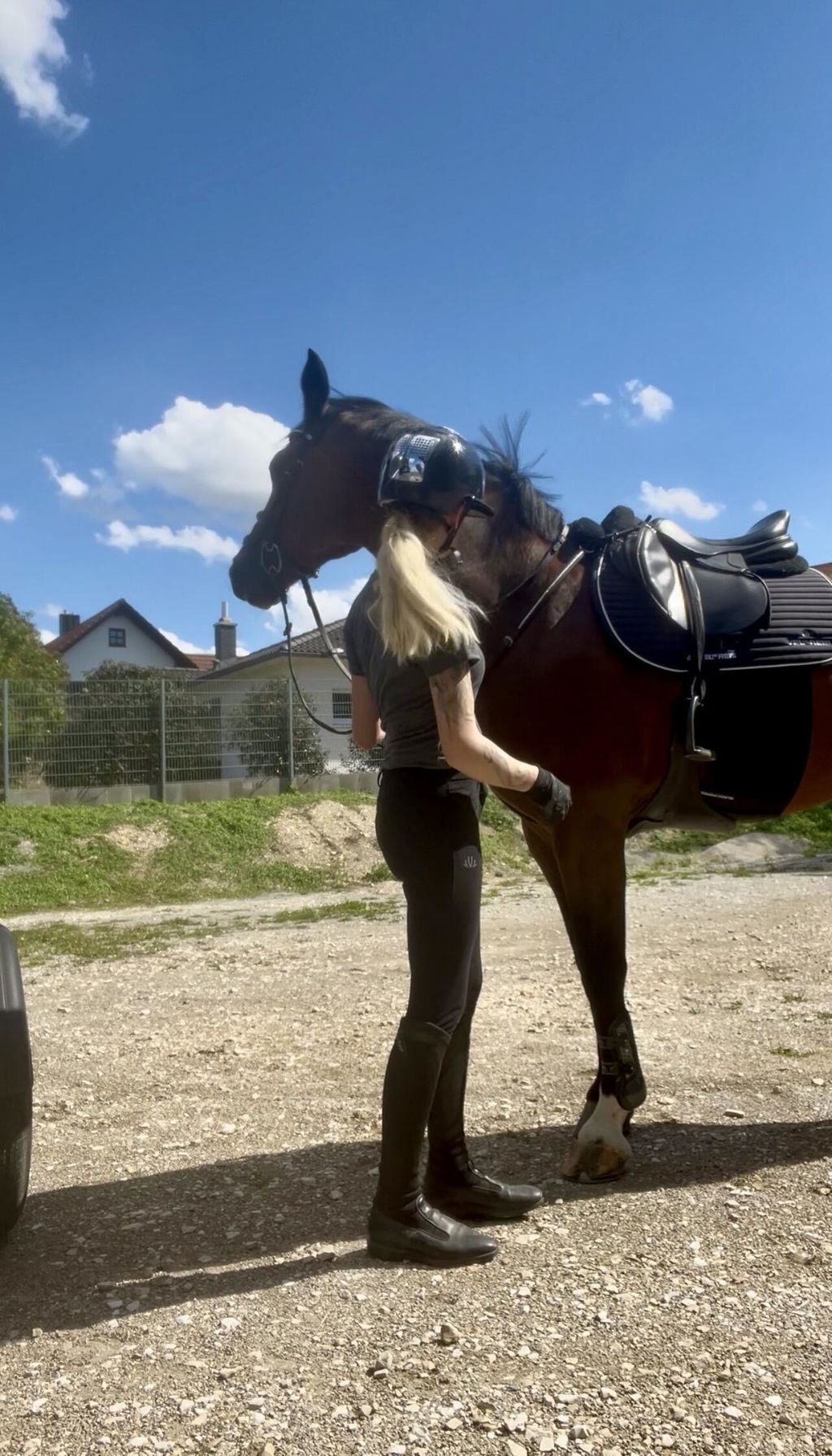
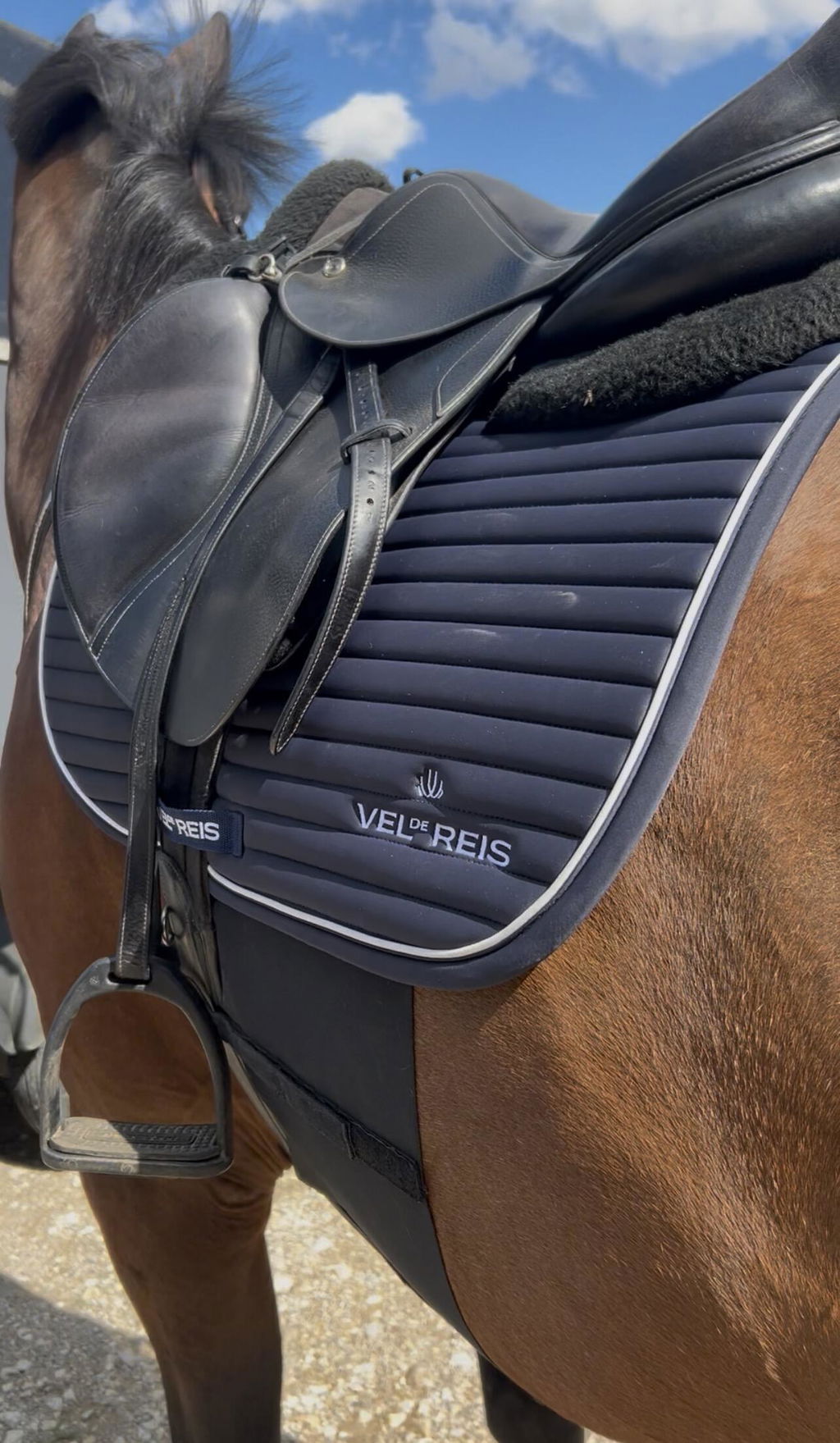
Riding apparel severely impacts equestrian posture by either biomechanically supporting or physically restricting the movement of the pelvis, spine, and scapula. Poorly tailored show jackets with low elasticity restrict the shoulder blades, causing riders to subconsciously hunch forward when approaching a fence. Similarly, low-rise breeches with rigid waistbands pinch the lower abdomen, forcing the rider to tilt their pelvis forward and hollow their lower back to escape the discomfort. This destroys the classic deep-seated alignment required in dressage. Premium, biomechanically tailored equestrian wear utilizes active core compression and four-way bi-elastic fabrics to act as a mild exoskeleton, subconsciously encouraging neutral spinal alignment and permitting total joint freedom without penalizing the rider's balance.
1. The Delicate Biomechanics of Equestrian Competition
Equestrianism stands alone in the sporting world as the only athletic discipline where your exact physical posture dictates the immediate behavior of a 1,200-pound prey animal underneath you. The slightest involuntary shift in your shoulders, crossing of your hands, or locking of your hips transmits a severe, unintended neurological cue down through the saddle tree and directly into your horse's back.
Because the communicative feedback loop between horse and human is so sensitive, rider alignment must be flawless. If your clothing fights your body's natural mechanics, you are destined to lose. Human beings are hardwired to avoid physical discomfort. If a seam pulls tightly across your back, or a waistband digs sharply into your stomach, your body will subconsciously alter its position to relieve that localized pressure. This is precisely why premium European tailoring is not merely about aesthetic elegance—it seamlessly blends advanced sports science with traditional formality to preserve the rider's aerodynamic, balanced posture.
Comprehensive Table of Contents
2. Jacket Constriction & The Forward Hunch
The most visually obvious postural failure in the show ring is the rounded, collapsed shoulder—often referred to pejoratively as the "roached back" or the "forward hunch." While poor baseline equitation can certainly cause this, in professional levels, it is almost exclusively caused by a poorly constructed show coat.
The Critical Mechanics of the Scapula
When a jumper rider approaches a large oxer, they must maintain an open, proud chest with their shoulders rolled back and down. This position engages the latissimus dorsi and stabilizes the core, allowing the rider to absorb the thrust of the takeoff.
However, if a show jacket lacks rear-shoulder stretch gussets or uses a cheap, rigid polyester that lacks true bi-elasticity, the rider will feel intense tightness pulling across the upper back of the garment. To escape this suffocating tightness across their scapula, the rider will naturally and subconsciously round their shoulders forward. This collapses their chest cavity, throws their upper body weight perilously in front of the center of gravity, and causes them to "jump ahead" of the horse right at the base of the fence. A premium softshell coat, like those engineered by Vel De Reis, utilizes four-way Italian elastane that stretches endlessly over the shoulder blades, allowing the rider to maintain a proud chest without feeling the coat pull.
3. Breech Rises and the Anterior Pelvic Tilt
A deep, independent, and quiet seat requires a perfectly neutral pelvis. The rider must balance squarely upon their two ischial tuberosities (the sit bones) and the pubic symphysis, forming a stable tripod of bone directly in contact with the saddle.
Hollowing the Lumbar Spine in the Sitting Trot
The rise (the height of the waistband) of a rider's breeches is the single most critical factor in pelvic alignment. Low-rise breeches with stiff, unforgiving canvas waistbands often pinch deeply into the lower abdomen when the rider sits in the saddle. To immediately relieve this harsh pinching, the rider defaults to arching or "hollowing out" their lower back. This action forcefully tilts the pelvis forward (an anterior pelvic tilt).
When the pelvis tips forward, the rider is instantly popped off their sit bones and rolled onto their crotch. In dressage, an anterior pelvic tilt is disastrous; it creates a rigid lower back that cannot absorb the massive shockwaves of the sitting trot. High-waisted, anatomically mapped breeches (or compression riding tights) contour perfectly to the natural curve of the lumbar spine. By resting entirely above the hip bones, they allow the stomach to expand fully during deep breathing, resulting in total pelvic freedom and a profoundly deep seat.
4. The Exoskeleton: Core Compression Theory
Modern sports science has introduced targeted muscular compression into equestrian gear. Elite base layers and riding tights are now being woven with varying zones of elastane density.
Garments with targeted core compression act as a mild, invisible exoskeleton for the rider. By lightly but constantly stimulating the cutaneous receptors along the abdominal wall and the obliques, compressive garments provide continuous sensory feedback to the central nervous system. This continuous sensory stimulation acts as a passive reminder to the rider's brain to engage and recruit their core muscles. Without the rider even actively thinking about it, the compression naturally prevents the torso from collapsing or slouching during long, grueling flatwork sessions or multi-day clinics.
5. How Silicone Grip Alters Leg Position
While the upper body controls balance, the lower leg serves as the foundation. The introduction of silicone gel grip breeches revolutionized saddle security, but inexperienced riders often purchase grips that are entirely too aggressive for their discipline.
If a show jumper accidentally wears a heavily-coated "Full Seat" silicone tight into a 1.20m course, they will discover a violent biomechanical problem: the silicone will essentially "glue" the rider's knee and upper thigh directly to the saddle leather. Because the knee joint is immobilized by friction, when the horse thrusts powerfully upward over the fence, the rider's lower leg (from the knee down) will act as a pendulum and swing violently backwards toward the horse's flank. A strategically placed, moderate-friction knee patch ensures the necessary lateral stability while permitting the hip and knee joints to hinge fluidly with the motion of the jump.
6. Comprehensive FAQ Guide
Can wearing the wrong breeches cause lower back pain from riding?
Yes. If your breeches are dictating a hollowed lower back (anterior pelvic tilt) to avoid waistband pinching, your lumbar spine is violently absorbing all the concussive force of the horse's gait, rather than your core acting as a shock absorber. This leads directly to chronic lower back spasms.
Why are high-waisted breeches universally recommended for dressage?
Dressage riders must maintain prolonged periods in the extended sitting trot. High-waisted breeches offer crucial lumbar and lower-abdominal support while entirely eliminating waistband friction across the stomach, allowing the rider to absorb the horse's massive, oscillating movement deeply and correctly.
How do I know if my show jacket is pulling my shoulders forward?
Conduct the "posting test." Stand on the ground and simulate your two-point jumping position. If you feel immediate, tight tension spanning the fabric across your shoulder blades—or if the sleeves pull drastically up your forearms—the coat is severely restricting your scapula's range of motion.