The Chaos of Transitional Weather
Equestrians operate completely at the mercy of the elements. In the dead of summer, the strategy is simple: wear as little as legally allowed to manage the heat. In the depths of winter, you wear heavily insulated parkas to prevent freezing. But the true test of your equestrian wardrobe occurs during the transitional seasons—early spring and late autumn.
A typical April morning at the barn might begin at 38 degrees Fahrenheit, necessitating winter gloves and a frozen water trough. By two in the afternoon, the sun has baked the riding arena to a suffocating 75 degrees. If you ride in a heavy winter coat, you will suffer severe thermal overload and soak yourself in sweat. When the sun dips below the horizon thirty minutes later, that trapped sweat will rapidly evaporate, causing you to freeze violently.
Surviving inter-seasonal riding requires abandoning massive, single-solution bulky jackets and adopting a highly modular, technical layering system. Every garment must be capable of independent thermoregulation, and every piece must integrate seamlessly with the next.
The Foundation: Advanced Base Layers
The base layer is the single most critical garment in your inter-seasonal arsenal. Its singular job is active moisture transport—it must forcefully rip sweat away from your skin.
Why Cotton Kills
Never wear a pure cotton t-shirt as a base layer when layering up. Cotton acts like a sponge. It absorbs sweat but refuses to release it. If you wear cotton under a fleece sweater, you will become a heavy, wet, freezing mess the second you stop working.
The UPF Technical Shirt
The ultimate base layer is a long-sleeve, UPF 50+ technical training shirt featuring micro-mesh paneling. The synthetic polyamide fibers are entirely hydrophobic. As soon as you sweat, the capillary action drives the moisture to the exterior of the shirt.
Furthermore, because long sleeve training shirts feature high UPF ratings, they double as your absolute final layer when the afternoon temperature spikes. You can strip off your sweaters and ride exclusively in the base layer, fully protected from the intense UV radiation of the midday sun.
Mid-Layers: The Insulating Trap
The mid-layer provides the actual warmth. Its objective is to take the heat your body is generating and trap it in thousands of microscopic pockets of "dead air" hovering millimeters above your base layer.
The Versatility of Micro-Fleece
Heavy wool sweaters are too bulky, entirely lack mechanical stretch, and restrict your arms from executing proper half-halts. Micro-fleece is the superior synthetic mid-layer. It is incredibly lightweight, hydrophobic, and intensely warm. When the chill sets in at 4:00 PM, you zip a micro-fleece over your technical training shirt. The cold air is blocked by the fleece, and the sweat your base layer is pushing outward effortlessly passes right through the highly porous fleece to evaporate.
Legwear for Fluctuating Temperatures
Layering your upper body is easy; you simply take a jacket off. Layering your lower body is complex, as taking off your pants in the middle of a crowded barn aisle is generally frowned upon.
Four-Way Stretch Riding Leggings
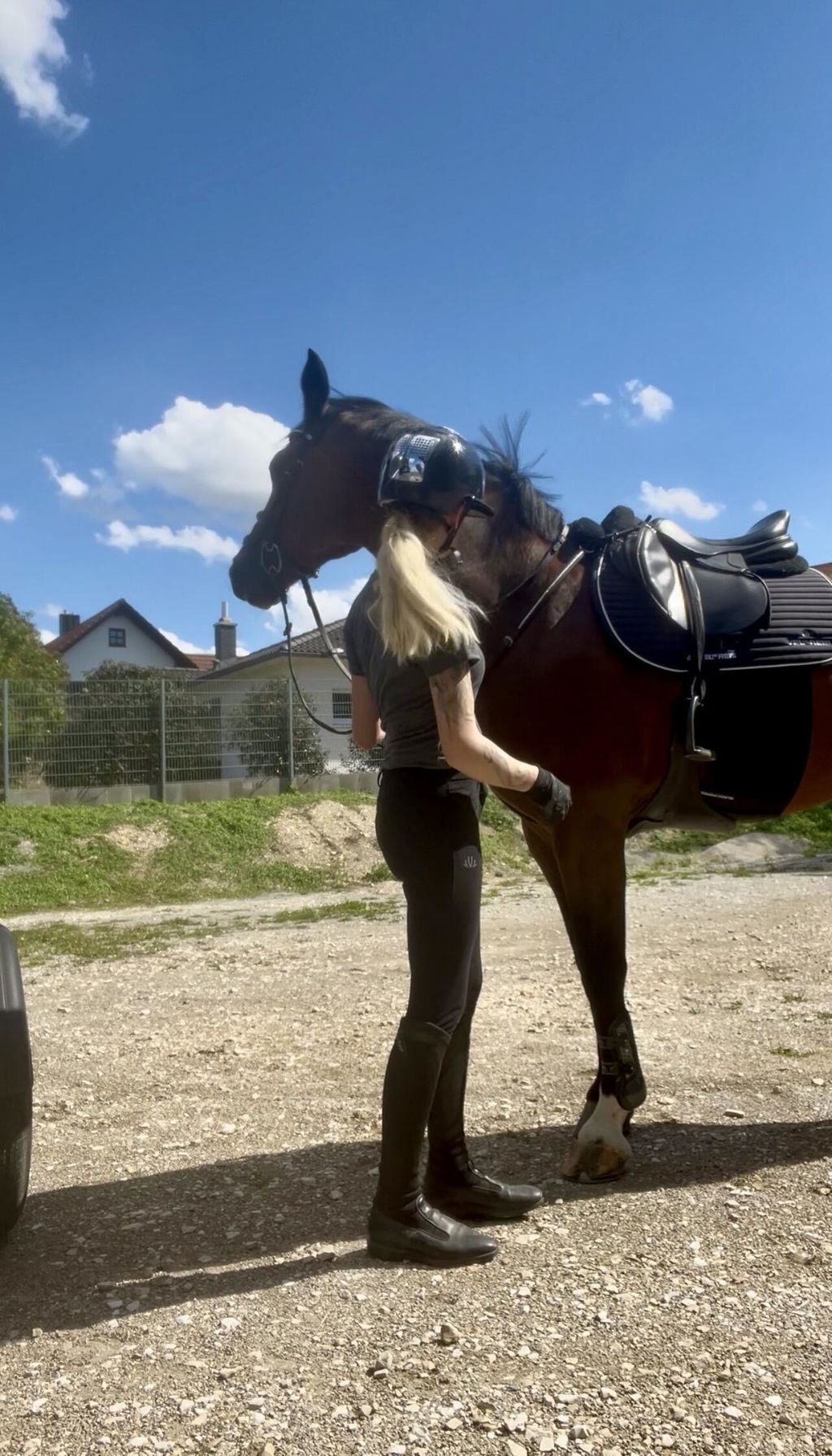
In unpredictable weather, heavy structured breeches can feel terribly suffocating at 2:00 PM. A far superior option is the women's jumping breeches with silicone knee-grip panels. Because these leggings act as high-tech compression wear, they utilize extreme four-way stretch synthetic fabrics. In the cold morning, the dense synthetic weave acts as an effective wind blocker against the skin. By the afternoon, the fabric's aggressive wicking capabilities allow excess heat to bleed off through evaporation, ensuring the rider is never sweltering.
If the morning is genuinely freezing (below 35 degrees), an extremely thin layer of silk long underwear or hyper-lite thermals can easily be slipped underneath the riding legging without drastically altering the fit of the boot.
Equine Layering: The Fleece Blanket
Transitional weather is equally brutal on the horse, especially if they have a thick winter coat but are being ridden in 60-degree weather. They will sweat profusely during the ride and become extremely vulnerable to chilling when the ride ends.
The cornerstone of inter-seasonal equine management is the heavy fleece blanket (or cooler). You must toss this over the horse the moment the saddle comes off. The dense pile of the polar fleece instantly traps the horse's escaping body heat, preventing a sudden, dangerous plunge in core temperature. Simultaneously, the fleece’s capillary action pulls the massive amounts of sweat away from the horse’s skin, drawing it to the outside of the blanket where it evaporates unharmed.
Technical Laundry Protocol
Inter-seasonal wardrobes are massive investments in high-end synthetic chemistry. Protect them fiercely in the wash.
- Cold Water Exclusively: Hot water will physically melt the elastane in your riding leggings and deform the microscopic pores of your technical training shirts.
- Zero Fabric Softener: Fabric softener coats the synthetic fibers in a liquid wax. This completely destroys the capillary action of your base layers and stops your fleece blankets from absorbing sweat.
- Never Tumble Dry Fleece: The heat of a dryer will melt the thousands of tiny plastic fibers intersecting on a fleece blanket, turning a soft, plush blanket into a hard, scratchy, non-breathable mat. Air dry only.
Frequently Asked Questions
Why shouldn't I wear a heavy winter coat during spring rides?
A heavy winter coat lacks modularity. As soon as you warm up, you will become dangerously hot and sweat heavily. If you take the coat off, you are instantly freezing with no middle ground. Layering allows you to remove insulation incrementally.
Can I wear a t-shirt under a softshell jacket?
You can, but it is not ideal. A long-sleeve technical base layer is vastly superior. It prevents your sweaty, bare arms from creating high-friction contact against the smooth synthetic interior of the softshell jacket, ensuring total shoulder mobility.
How many layers are too many?
If you are wearing more than three upper-body layers (Base, Mid, Outer Shell), you are severely restricting your athletic mobility. If you are still cold with three layers, you need a higher quality, denser mid-layer (like advanced micro-fleece) to trap heat more efficiently.
Concluding Thoughts
Equestrianism requires absolute focus; if you are shivering uncontrollably or sweltering in a heavy coat, your horse has already lost your attention. By deploying a systematic, modular wardrobe anchored by aggressive moisture-wicking base layers, insulating fleece mid-layers, and highly adaptable riding leggings, equestrians can render the massive temperature swings of spring and autumn completely irrelevant to their performance. If you're streamlining your kit further, our minimalist competition capsule wardrobe guide outlines exactly what to keep.