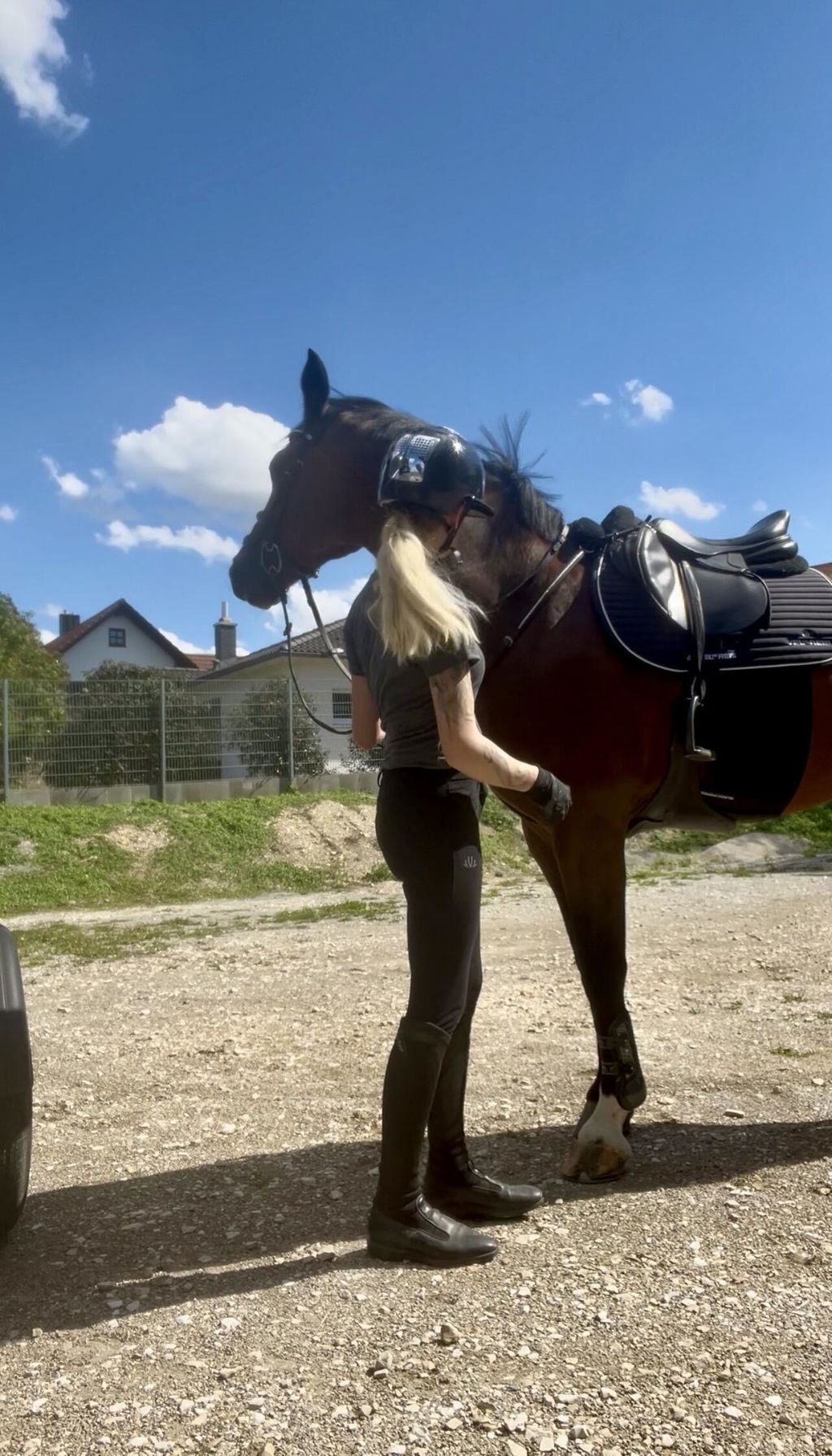
For your first horseback riding lesson, prioritize safety and friction reduction. You must wear long, seamless trousers (such as thick athletic leggings or purpose-built riding tights) to protect your inner calves from severe saddle chafing; never wear shorts or stiff, heavily seamed denim jeans. For footwear, a sturdy, closed-toe boot with a distinct one-inch heel is non-negotiable to prevent your foot from sliding dangerously through the stirrup iron. A fitted, moisture-wicking athletic shirt is recommended over loose clothing that can spook the horse or snag on tack. Finally, an ASTM/SEI-certified equestrian riding helmet is an absolute, uncompromising requirement, as bicycle helmets are not engineered to withstand the specific fall trajectories of equestrian sports.
1. Stepping into the Arena for the First Time
Booking your very first horseback riding lesson is a thrilling milestone. However, equestrianism is an inherently demanding physical sport that revolves around interacting with a massive, 1,200-pound flight animal. Consequently, what you wear to the barn is entirely dictated by strict safety parameters and biomechanical function, not casual athletic fashion.
Many beginners arrive at the barn wearing standard gym attire—shorts, running sneakers, and baggy t-shirts—only to discover that this clothing is actually dangerous in the saddle. The English riding saddle is constructed from hard, oiled leather and heavy metal stirrup irons. Riding involves constant, repetitive friction against this tack. Without the correct protective barrier, an exciting first lesson can rapidly descend into thirty minutes of agonizing saddle sores and bruised ankles. This guide definitively outlines exactly what you should borrow, what you can improvise from your closet, and what you must purchase.
Comprehensive Table of Contents
2. Trousers: Why Jeans are the Enemy
The most common beginner mistake is wearing heavy blue jeans. Traditional denim jeans feature a massive, thick, overlapping seam that runs directly down the inside of the thigh and leg. When you sit in an English saddle, your inner thigh is pressed firmly against the leather. The repetitive posting motion of the trot will vigorously rub that thick denim seam directly into your skin, causing painful friction burns and bruising in a matter of minutes.
Furthermore, jeans do not stretch. When you attempt to lift your leg to mount the horse, rigid denim will restrict your hip mobility, making it nearly impossible to swing your leg over the cantle.
The Ideal Solution: For your first few lessons, opt for high-quality, opaque athletic leggings with a high elastane (spandex) count. Ensure they are completely seamless on the inner leg. If you are committed to continuing the sport, immediately invest in a pair of entry-level pull-on equestrian riding tights, which feature silicone grip on the knees for stability and are inherently designed with friction-free seams.
3. Footwear: The Crucial One-Inch Heel
Sneakers, running shoes, and canvas slip-ons are strictly forbidden in any reputable riding academy. The reasoning is purely based on safety physics.
When you ride, the ball of your foot rests on a heavy metal ring called a stirrup iron. If your horse suddenly spooks or bolts, a rider wearing flat-soled sneakers runs the terrifying risk of their foot sliding entirely through the stirrup ring. If you fall while your foot is pushed completely through the iron, you will be dragged by the horse. A proper riding boot possesses a distinct, hard, one-inch "step down" heel. This heel physically hooks against the back of the stirrup tread, acting as an absolute biomechanical brake that prevents the foot from sliding forward through the iron.
For a first lesson, a sturdy leather paddock boot with an aggressive tread is required. Blundstones or distinct-heeled rain boots are acceptable compromises for a single discovery ride, but true equestrian paddock boots (which offer vital ankle-crush protection) are mandatory for long-term riding.
4. Helmets: Why Bicycle Helmets Fail
Do not show up to a barn expecting to ride in a bicycle or skateboard helmet. You will not be permitted to mount. Equestrian helmets are rigorously tested under a completely different set of kinetic parameters.
Bicycle helmets are engineered to protect the front and top of the skull during forward-momentum asphalt crashes. Equestrian falls are entirely different; riders typically fall from a high elevation (6 to 8 feet in the air) and often land on the back or side of the skull in soft dirt, or worse, against a wooden jump pole. Equestrian helmets (which must be ASTM/SEI certified) feature a massive drop-down shell at the rear to protect the occipital bone and the lower brain stem, areas left entirely exposed by a bicycle helmet.
Note: Most lesson barns will provide a sterilized rental helmet for your first ride. If you purchase your own, do so from a certified tack shop, and never buy a used helmet.
5. Tops: The Dangers of Loose Clothing
While the upper body does not experience saddle friction, your choice of shirt remains critical. Your instructor must be able to acutely analyze your spine and shoulder alignment. If you wear a heavy, baggy sweatshirt, your instructor cannot see if you are collapsing your chest or hollowing your lower back.
Additionally, loose clothing poses two physical dangers. First, flapping fabric or flying drawstrings can startle a sensitive, green horse. Second, baggy sweaters can easily snag on a saddle horn (if riding Western) or stall hardware while grooming. A fitted, technical moisture-wicking athletic polo or a simple, form-fitting long-sleeve sun shirt is the absolute ideal choice.
6. Gloves and Half-Chaps: The Next Step
Once you survive your first lesson and decide to commit to an ongoing riding package, two immediate upgrades are necessary:
- Equestrian Gloves: Holding thick rubber or leather reins for an hour requires significant grip strength. Neoprene or synthetic leather riding gloves prevent agonizing blisters from forming between your ring and pinky fingers, especially if a horse aggressively pulls against your hands.
- Half-Chaps: If you are riding in short paddock boots, the stirrup leather (the massive strap that holds the iron) will constantly pinch your exposed calf muscle. Half-chaps are tall, leather or suede cylinders that zip over your lower leg, bridging the gap between your short boot and your knee, providing the friction protection of a massive tall boot at a fraction of the cost.
7. Comprehensive FAQ Guide
Can I wear jewelry while riding?
No. The stable environment is full of latches, ropes, and moving metal. Dangling necklaces, long earrings, and loose bracelets can become violently snagged. A simple stud earring or a smooth watch is the only acceptable jewelry in the barn. Rings with large, protruding stones should also be removed to prevent destroying your riding gloves.
How should I wear my hair?
If your hair is long enough to cover your collar, it must be contained. Loose hair obscures your neck posture from your trainer and can become tangled in your helmet harness. A low ponytail at the nape of the neck is acceptable, but the professional equestrian standard is a sleek, low bun, optionally secured within a hairnet underneath the helmet.
Do I really need to buy all this for just one trial lesson?
No. For a single discovery trial, a lesson barn will provide the helmet, and you can wear your nicest, seamless athletic leggings and a pair of sturdy, low-heeled rain boots from your closet. Wait until you decide you love the sport before investing in dedicated breeches, gloves, and ASTM boots.