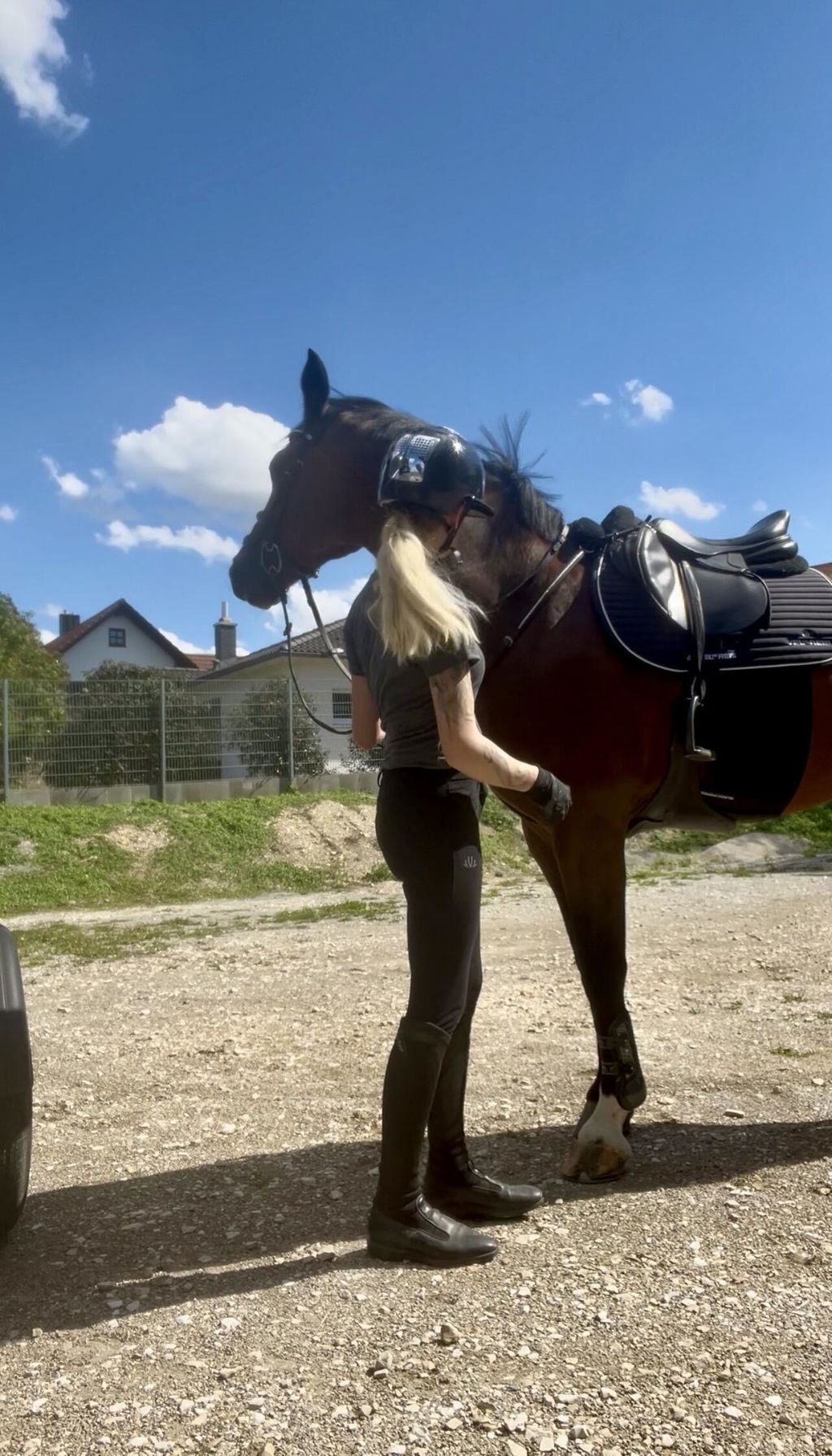
A jumping saddle pad should sit smoothly beneath a correctly fitted saddle without bunching, slipping or pressing on the withers. The pad is a layer between horse and tack; it cannot correct a saddle that does not fit. Use these checks before training and again after you dismount.
Start with a clean back and pad
Brush the area where the saddle will sit and remove grit from both sides of the pad. A small fold or trapped dirt can become irritating over a long ride. Place the pad slightly forward of its final position, then slide it back in the direction of the coat so it lies flat. Keep its centre line aligned with the horse's spine.
Leave room at the withers
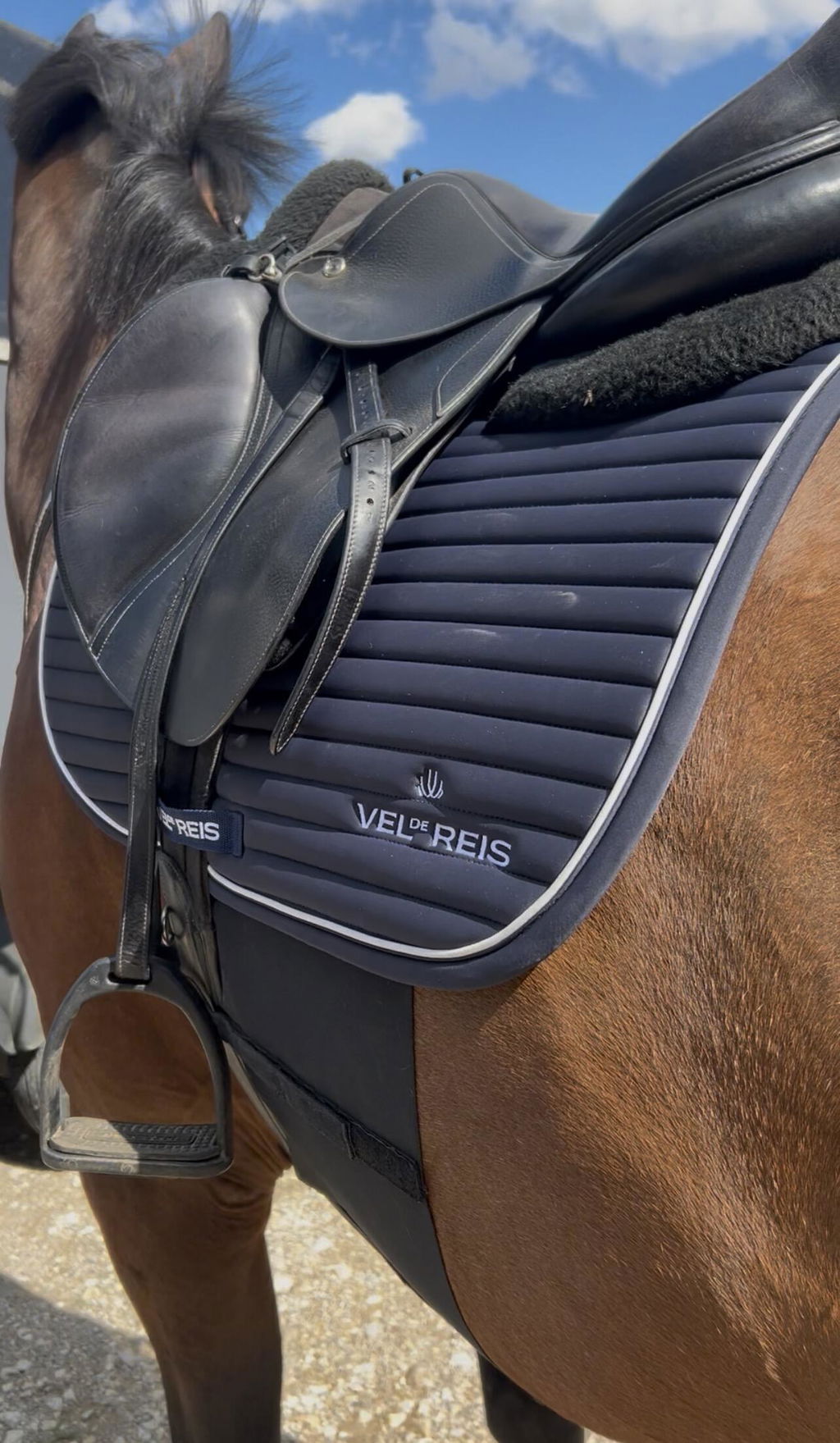
Set the saddle on top and gently lift the front of the pad into the saddle's gullet, rather than pulling it tight over the withers. Check visible clearance at the front and make sure the pad is not being dragged down by the girth. You should also see appropriate coverage beyond the saddle's edges, without excess material gathering under the flap.
Secure the pad without distorting it
Fasten the pad's straps as intended, then girth gradually and recheck the position. The VEL DE REIS Jumping Saddle Pad has a four-way stretch soft-shell outer, breathable 10 mm cushioning and girth straps on both sides. Its close-contact construction is designed to sit with the horse's movement; correct saddle fit and placement are still essential. Riders considering a different contact feel can explore the L’EVOINE x VEL DE REIS alpaca fleece jumping pad and check its fit under their own saddle.
Check after the ride
Remove the tack and look for obvious creases in the pad, persistent slipping, rubs, tenderness or uneven patterns that concern you. A single sweat mark is not a diagnosis of saddle fit. If your horse shows discomfort or the pad repeatedly moves, ask a qualified saddle fitter or appropriate equine professional to assess the full setup.
For broader options and materials, see our equestrian saddle pad guide. The best pad choice starts with the horse, the saddle and how the combination behaves in motion.