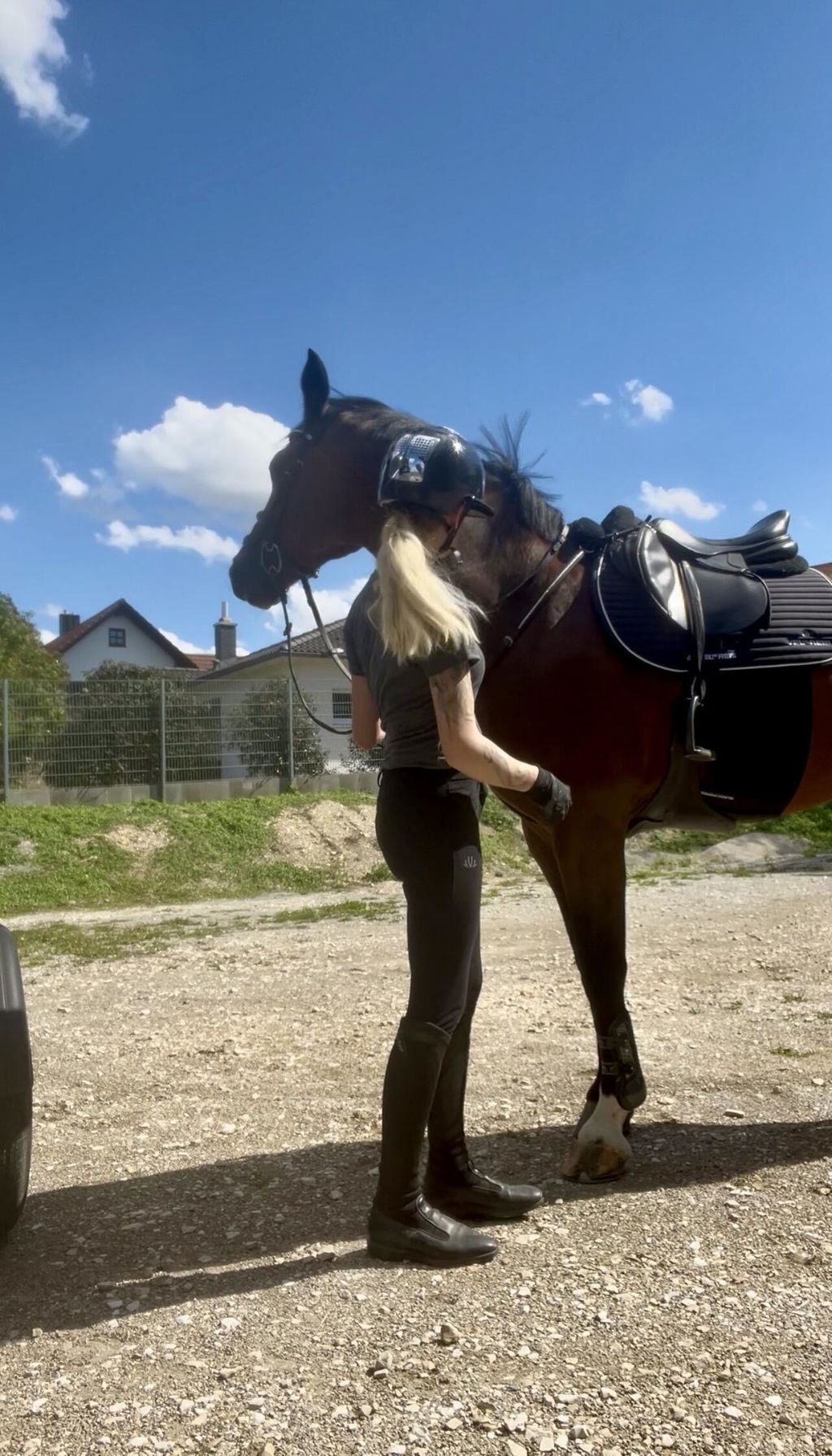
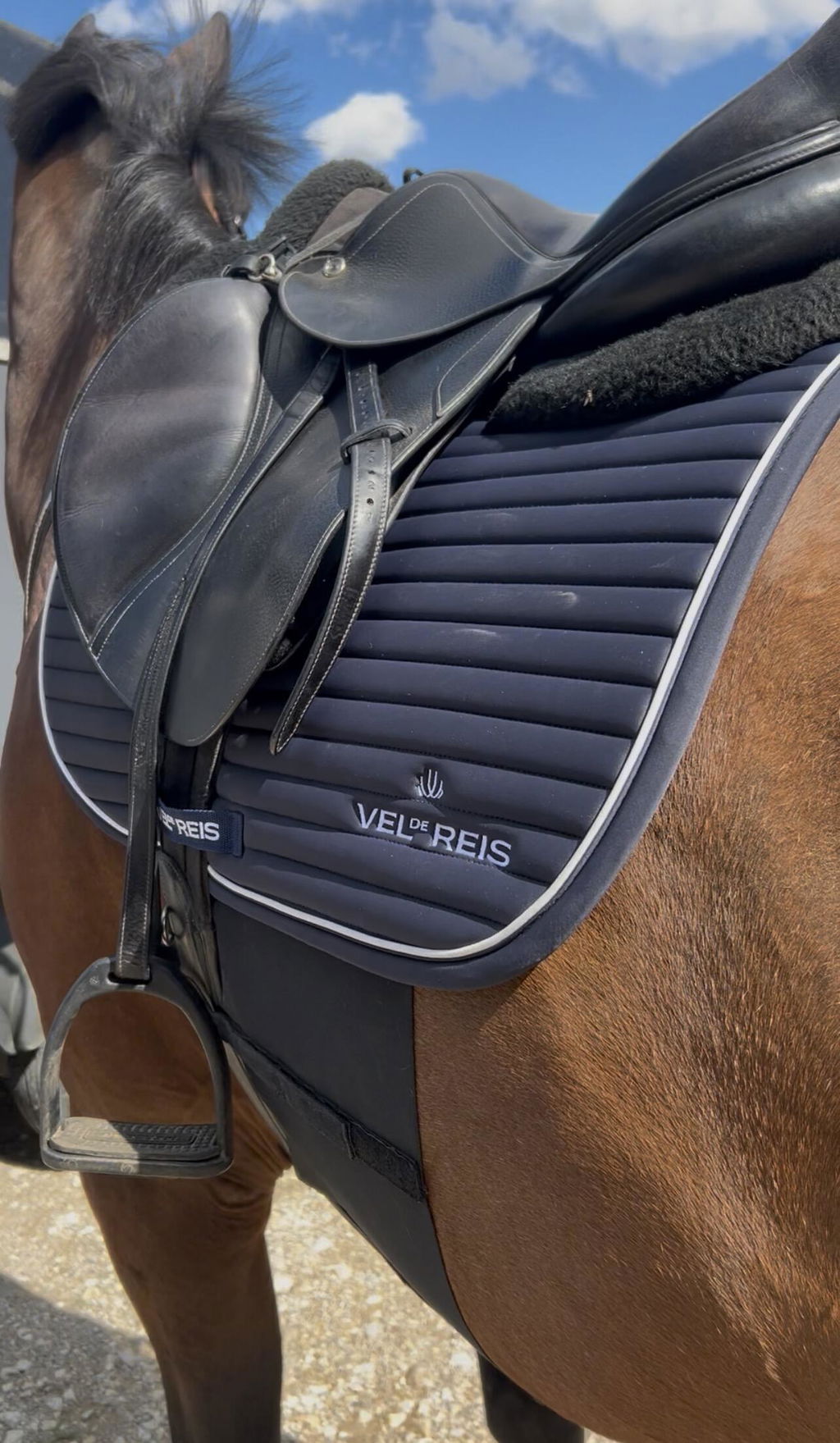
Technical equestrian clothing has changed what riders can expect from competition apparel. The traditional silhouette remains, but modern garments can now provide stretch, moisture management, breathability and UV protection without looking like conventional sportswear.
For riders, the important question is not how many technical terms appear on a label. It is whether the fabric and construction genuinely support movement, comfort and reliable fit in the saddle.
What makes equestrian clothing technical?
Technical riding apparel is designed around the demands of athletic movement. In equestrian sport, that means repeated flexion through the hip and knee, sustained shoulder and elbow positioning, contact with the saddle and long periods spent outdoors or in warm-up arenas.
Useful features can include four-way stretch, moisture management, quick-drying fibres, breathable panels, UV protection, shape recovery and carefully positioned seams.
Four-way stretch and freedom of movement
Four-way stretch allows fabric to move both horizontally and vertically. This is particularly relevant to riding because the body is rarely static: the hip opens and closes, the knee flexes and the upper body constantly makes small adjustments to follow the horse.
Stretch alone is not enough. A competition garment also needs recovery so it returns toward its intended shape rather than becoming loose after repeated wear.
VEL DE REIS jumping breeches are developed around a close performance fit and technical movement. Explore Women's Jumping Breeches and Men's Jumping Breeches.
Moisture management and quick-drying fabrics
Riding creates heat even when the visual movement looks controlled. Warm-up, course walking, schooling and competition can all increase body temperature.
Moisture-managing fabrics are designed to move perspiration away from the skin and help it evaporate more efficiently. Quick-drying construction can be especially useful during summer shows and multi-class competition days.
Read our guide to moisture-wicking technology in riding gear.
Breathability and ventilation
Breathability is not only about the fabric itself. Garment construction matters too. Mesh zones, perforated panels, unlined interiors and carefully positioned ventilation can all improve airflow while preserving a polished appearance.
VEL DE REIS show jackets use lightweight technical construction and ventilation-led design to balance formal presentation with the practical needs of riding.
Explore the Women's Show Jacket and Men's Show Jacket.
UPF protection in riding clothing
Riders spend long periods outdoors, often during the strongest daylight hours. Fabrics with a documented UPF rating can add useful protection alongside sunscreen and other sun-safety measures.
UPF 50+ fabric is designed to block a high proportion of ultraviolet radiation, making it especially relevant for training shirts and summer riding apparel.
For more detail, read Understanding UPF 50+ Sun Protection in Summer Riding Shirts.
Technical competition shirts
A show shirt has to perform underneath a jacket while still looking refined when the jacket is removed. Stretch, low-bulk seams, moisture management and lightweight construction can make a substantial difference during warm-up and on long competition days.
Explore the Women's Show Shirt, Men's Competition Polo Show Shirt and Men's Long-Sleeve Competition Shirt.
Technical fit: why pattern cutting matters
Fabric technology cannot compensate for poor fit. The garment pattern determines whether stretch is used effectively or simply masks tension in the wrong areas.
For breeches, riders need sufficient room through the hip and thigh without loose fabric around the knee. For jackets, the shoulder, sleeve and back must work together as the rider reaches forward. For shirts, the torso should remain close enough to layer cleanly without pulling across the shoulders.
Grip technology in breeches
Silicone grip is designed to increase contact between the rider and saddle. Knee grip concentrates this effect around the inner knee, while full-seat systems extend it across a larger contact area.
The strongest grip is not automatically the best grip. Too much adhesion can interfere with the rider's natural movement, so the ideal level depends on discipline, saddle and personal preference.
Read Knee Grip vs Full Seat Breeches: Which Is Right for You?.
Shape recovery and durability
Premium riding clothing is repeatedly stretched, compressed and exposed to friction. Good shape recovery helps a garment maintain its intended fit after hours in the saddle and repeated washing.
Durability also depends on seam construction, fabric quality and correct care. Follow the care label and avoid excessive heat where technical fibres are involved.
See our guide to washing and maintaining premium equestrian apparel.
How to choose technical equestrian clothing
- Start with fit: test clothing in a riding position rather than only standing.
- Match grip to discipline: more grip is not always better.
- Consider climate: prioritise breathability, moisture management and UV protection for warm conditions.
- Look at construction: seams, ventilation and pattern cutting matter as much as fabric claims.
- Choose recovery: technical stretch should return toward its original shape.
- Follow care instructions: correct washing helps preserve performance properties.
Performance should feel effortless
The best technical riding clothing should not constantly remind you that it is technical. It should allow the rider to focus on the horse while stretch, ventilation, grip and moisture management work quietly in the background.
VEL DE REIS develops equestrian apparel around that principle: modern performance engineering expressed through a refined European competition aesthetic.
Frequently asked questions
What is four-way stretch?
Four-way stretch describes fabric that stretches in both horizontal and vertical directions, allowing greater freedom of movement than a fabric that stretches primarily one way.
What does moisture-wicking mean?
Moisture-wicking fabrics are designed to move perspiration away from the skin and distribute it across the material so it can evaporate more efficiently.
Is UPF 50+ useful for riders?
Yes. Riders spend significant time outdoors, so UPF-rated clothing can form one part of a broader sun-protection strategy.
Are technical breeches only for competition?
No. The same properties that help in competition—stretch, shape recovery, breathability and moisture management—can also improve comfort during everyday training.